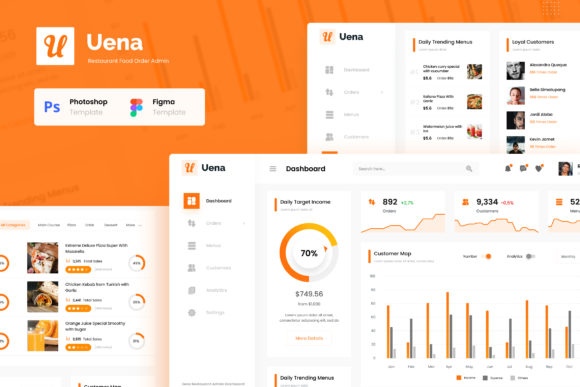
Restaurant Food Order Admin Dashboard
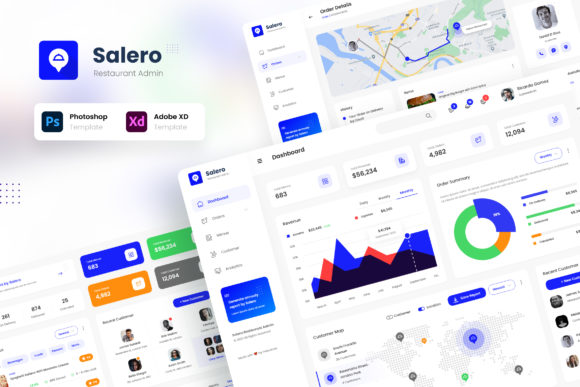
The Restaurant Food Order Admin Dashboard is a powerful tool designed to streamline the management of food orders, customer interactions, and operational efficiency for restaurant owners and administrators. Whether you run a small café or a large catering business, this dashboard offers a modern, intuitive interface that makes managing your food delivery and ordering system easier than ever before.
With a focus on usability and aesthetics, the dashboard includes six unique screens tailored for different aspects of restaurant operations. These include the Dashboard itself, Order List, Order Details, Customer List, Analytics, and Reviews. Each screen is crafted with attention to detail, ensuring a seamless user experience that enhances productivity and reduces administrative workload.
Why Choose This Dashboard Template?
This template is ideal for restaurants, food delivery services, and any business that requires an efficient admin dashboard. It provides a clean, professional look that can be customized to match your brand’s identity. The design is responsive, ensuring it works well on all devices, from desktops to mobile phones.
One of the standout features of this template is its availability in both PSD and Figma formats. This means you can easily edit and customize the designs using Adobe Photoshop or Figma, giving you full control over the visual elements. Additionally, the template uses a free font from Google Fonts, making it accessible and easy to implement without additional costs.
Common Mistakes When Using an Admin Dashboard
While the Restaurant Food Order Admin Dashboard offers many benefits, there are several common mistakes that users may make when choosing or implementing this tool. Understanding these pitfalls can help you avoid them and ensure a smoother experience.
One mistake is not thoroughly reviewing the documentation before starting. Many users overlook the importance of reading through the provided PDF documentation, which contains essential information about how to use the template effectively. Without this knowledge, you may struggle to navigate the interface or make necessary customizations.
Another common error is not checking the compatibility of the template with your existing systems. For example, if you’re using a specific content management system (CMS) or a custom-built platform, the dashboard may require additional integration work. Failing to address this early on can lead to delays and extra costs down the line.
Some users also neglect to test the template in different environments before deploying it. Testing the dashboard on various devices and browsers ensures that it functions as intended and provides a consistent experience for all users. Skipping this step can result in usability issues that affect customer satisfaction and operational efficiency.
How to Avoid These Mistakes
To avoid these common errors, start by carefully reviewing the documentation provided with the template. Take the time to understand each screen and how they interact with one another. This will save you time and prevent confusion later on.
Before purchasing or downloading the template, check if it aligns with your technical requirements. If you’re unsure, consider reaching out to the template provider for clarification. They may offer support or guidance to help you make an informed decision.
Once you’ve installed the template, conduct thorough testing across different devices and browsers. This will help identify any potential issues and ensure a smooth user experience for both administrators and customers.
What to Check Before Making a Decision
Before committing to the Restaurant Food Order Admin Dashboard, there are several factors to consider. First, evaluate your current workflow and determine how the dashboard can improve your operations. Does it address your specific needs, such as order tracking, customer management, or performance analytics?
Next, assess the level of customization required. While the template is designed to be user-friendly, some advanced modifications may require technical expertise. If you’re not comfortable with design tools like Figma or Photoshop, consider hiring a designer or developer to assist with customizations.
Also, think about the long-term maintenance of the dashboard. Will it be easy to update and scale as your business grows? A well-documented and flexible template can save you time and resources in the future.
Realistic Examples and Better Approaches
For instance, imagine you’re a small restaurant owner looking to manage online orders more efficiently. By using the Restaurant Food Order Admin Dashboard, you can track incoming orders, view customer details, and analyze sales trends all in one place. This reduces the need for multiple tools and simplifies your workflow.
A better approach would be to integrate the dashboard with your existing website or app. This ensures a cohesive user experience and allows customers to place orders seamlessly. Additionally, regularly updating the dashboard with new features or improvements can keep your operations running smoothly and efficiently.
If you’re a designer or developer, consider using the template as a foundation for your own custom solution. This allows you to maintain control over the design while leveraging the pre-built components for faster development.